Research
Overview
In mammals, body temperature is kept constant regardless of the outside temperature, and blood glucose is regulated within a constant range regardless of hunger or satiety. This mechanism that keeps the body's state constant despite external and internal environmental changes—"homeostasis"—is a system closely related to "health." By analyzing the mechanisms of tissue and immune homeostasis, we aim to understand the fundamental principles of life and to elucidate the mechanisms of the various diseases caused by its disruption.
Our research starts from in vivo systems (mainly mice), aiming for a fundamental understanding of biological phenomena through the identification of novel cell types and the elucidation of cellular functions. In addition to cell biology, immunology, molecular biology, and biochemistry, we employ advanced approaches such as omics analysis and genome editing. Two main projects are currently ongoing in the laboratory.
1. Biology of Tissue Macrophages
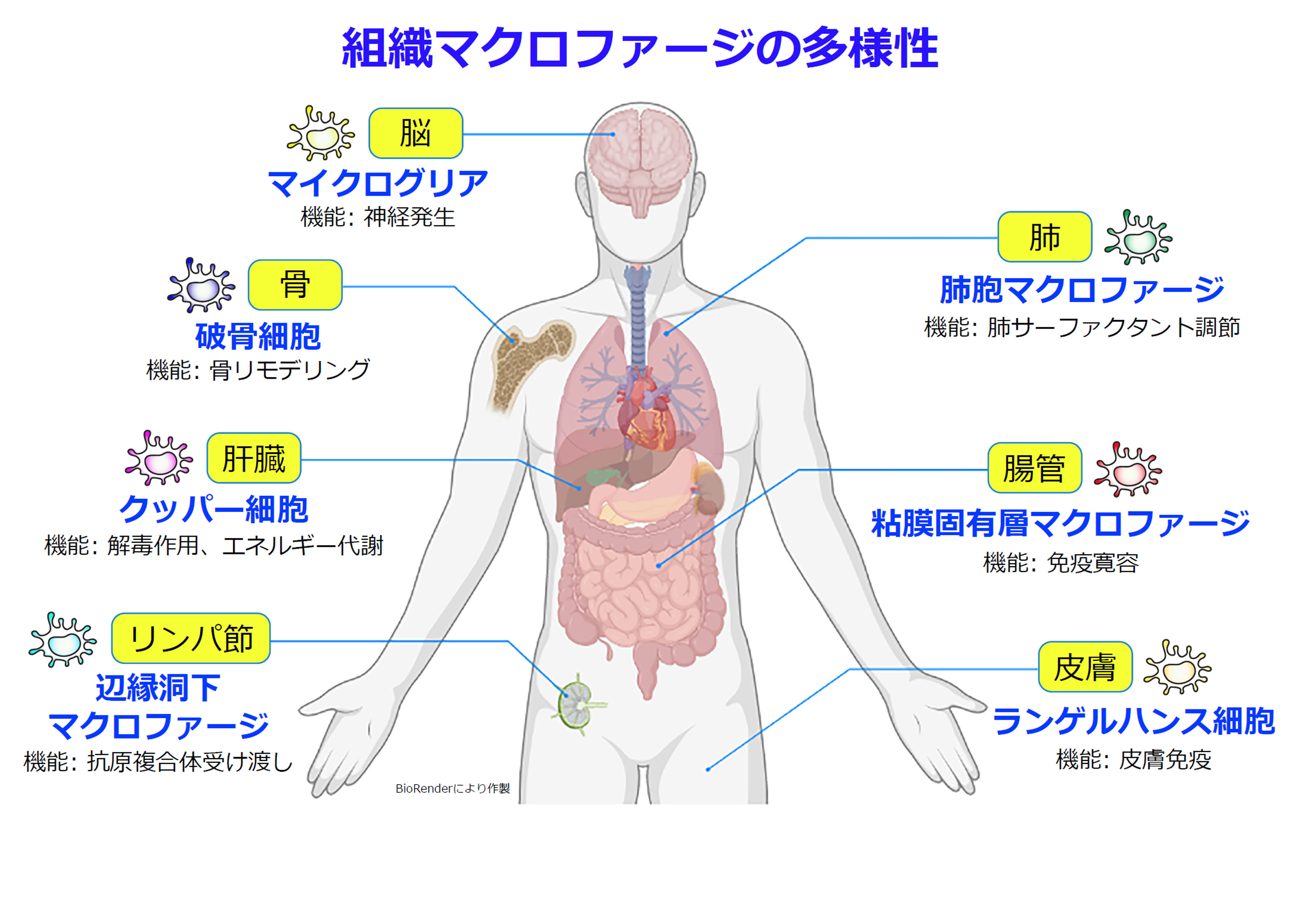
Macrophages are central to host defense and play an important role in initiating immune responses. Under non-infectious (steady-state) conditions, however, macrophages display diverse, tissue-specific functions and morphologies, playing essential roles in maintaining homeostasis by supporting the normal function of each tissue.
In recent years, it has become clear that abnormalities in macrophages can trigger functional impairment in various tissues and are closely involved in a wide range of diseases, including immunodeficiency, cancer, neurological disorders, and lifestyle-related diseases. We aim to elucidate the mechanisms by which macrophages acquire tissue-specific functions and phenotypes, and to clarify their roles in homeostasis.
2. Defense Mechanisms against Respiratory Infection
The novel coronavirus disease (COVID-19) that emerged in 2019 had an enormous global impact. Including COVID-19, humanity has experienced five pandemics since the 20th century, all of which were respiratory infections. The next pandemic is also likely to be an emerging respiratory infection that humanity has not yet experienced. Respiratory infections such as influenza and pneumonia are also among the diseases requiring the greatest attention from a public health perspective.
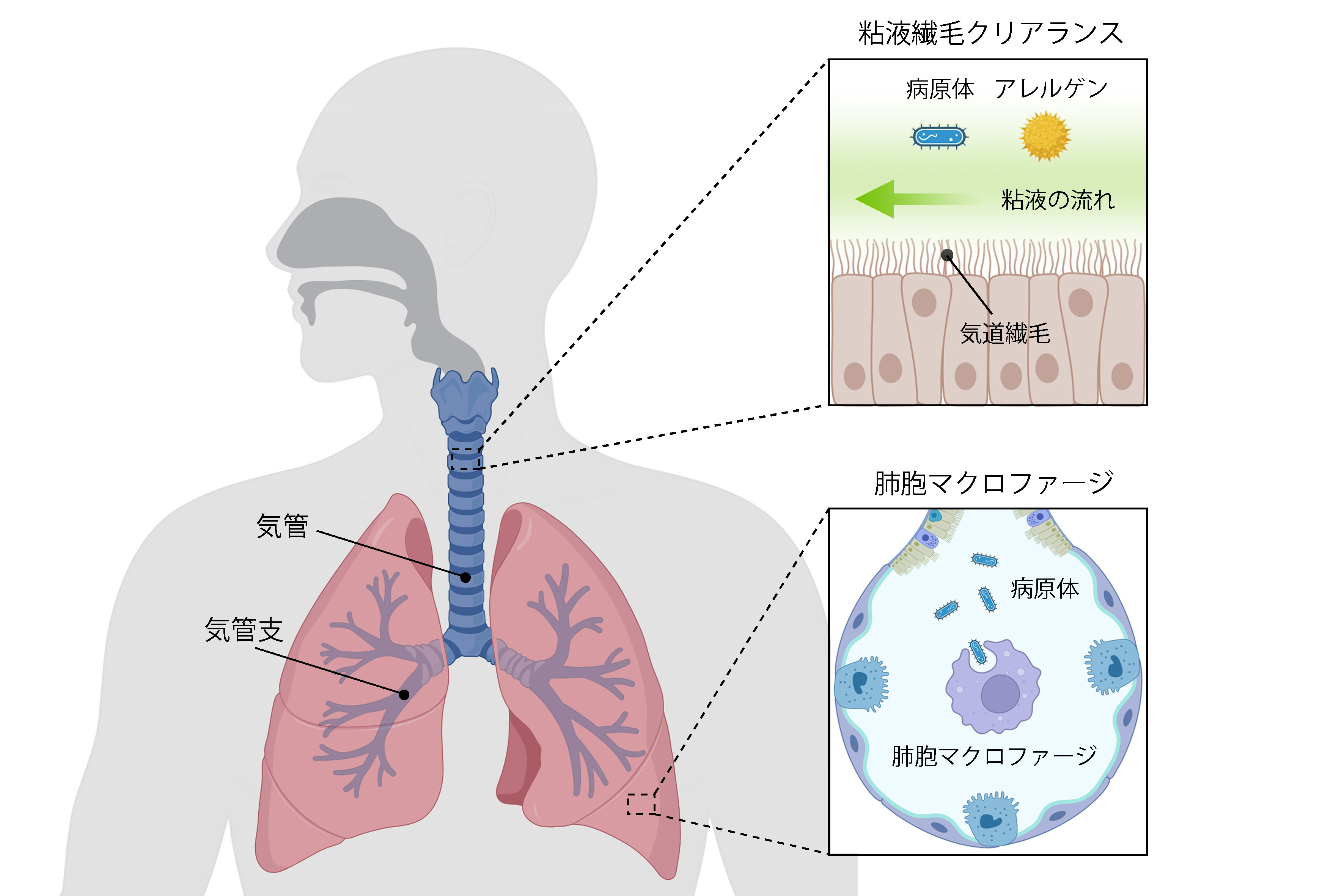
We focus on the host defense mechanisms that prevent pathogen invasion in the respiratory tract, such as the phagocytic system of alveolar macrophages and mucociliary clearance of the airways. Elucidating these fundamental mechanisms is expected to lead to preventive and therapeutic strategies against various respiratory infections, including emerging pathogens. The respiratory tract is also directly exposed to external stresses such as tobacco smoke, air pollution, and dryness, which alter its physiological functions; we are also investigating the effects of these stresses on respiratory homeostasis.