
Education in the Area and Department of Medical Device Engineering
Educational Policy of the Area and Department of Medical Device Engineering
We nurture creative developers to spearhead the development of medical devices in clinical settings.
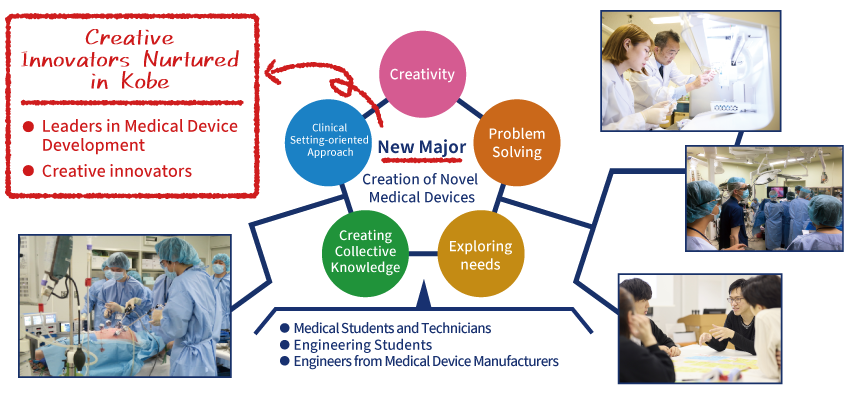
- Practical Training in Clinical Settings
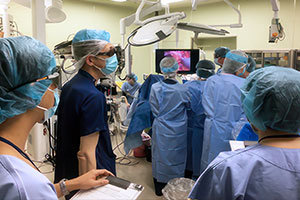
Our seminars and practical training emphasize real-world clinical settings.
- Identifying Needs and Problem Solving
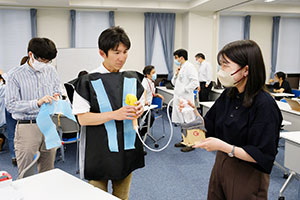
We develop the ability of students to identify problems in clinical settings and solve them themselves.
- Medicine and Engineering Come Together
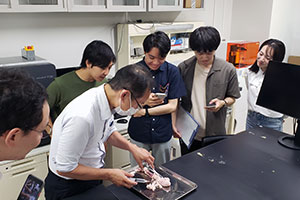
Students develop a broad understanding of both medicine and engineering.
Education and Research Fields
Through interdisciplinary collaboration, the aim is to develop and commercialize a wide range of diagnostic and therapeutic medical devices - from highly regulated medical devices (Classes III and IV under Japan’s classification system, including intracorporeal medical devices) to general medical devices and healthcare devices.
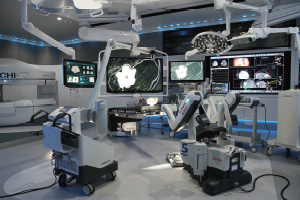
- Medical Devices and Systems Field

- Precision Theranostic Devices Field
- Implantable Medical Devices Field
In the Area and Department of Medical Device Engineering, faculty members from both the medical and engineering disciplines are assigned to each educational and research field. We cultivate students’ ability to develop a multifaceted perspective centered on medicine and engineering, and the education and research conducted is aimed at the development and practical application of medical devices.
For this purpose, we assign a co-advisor whose field of expertise differs from that of the primary advisor. This allows the scope of guidance in education and research and development to cover various academic disciplines.
Medical Devices and Systems Field
Actively utilizing cutting-edge technologies such as digital technology and nanotechnology to develop both individual devices and integrated medical device systems.
- Minimally Invasive Medical Devices
- Diagnostic Devices
- Healthcare Devices
- Medical Sensors
- Nanotechnology
- AI-assisted Diagnosis
- Programmable Medical Devices
- Telemedicine
- Home Healthcare
- Wearable Devices
- Health Management, Diagnosis and Treatment Apps
Precision Theranostic Devices Field
Research and development in this field focuses on medical devices for precise diagnosis and treatment, including surgical support robots and instruments, endoscopes and imaging systems, as well as navigation and decision-support devices.
- Surgical Support Robots
- Smart Treatment Rooms
- Navigation
- Endoscopy
- Diagnostic Imaging
- AI Treatment
- Regulatory Science
- Minimally Invasive Medical Devices
- Rehabilitation and Long-term Care Support
- Combination Products (Combinations of medical devices and drugs or biologics)
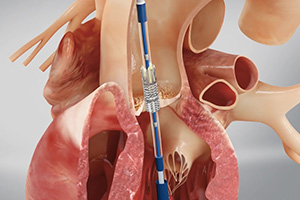
Implantable Medical Devices Field
Research and development in this field focus on the creation of concepts and model devices for implantable medical equipment and therapeutic devices, such as artificial blood vessels, vascular/ureteral/biliary stents, tissue-closure clips and orthopedic implants.
- Intracorporeal Medical Devices
- Minimally Invasive treatment
- Ultrasound Therapy
- Biocompatibility
- Biodegradability
- Organic and Polymer Materials
- Metallic Materials
- Composite Materials
- Drug Delivery Devices
- Nanomaterials
- Coatings
- Surface Functionalization and Modification
- Regenerative Medicine Support Devices
- Artificial Organs
Human Resources Development for Area and Department of Medical Device Engineering
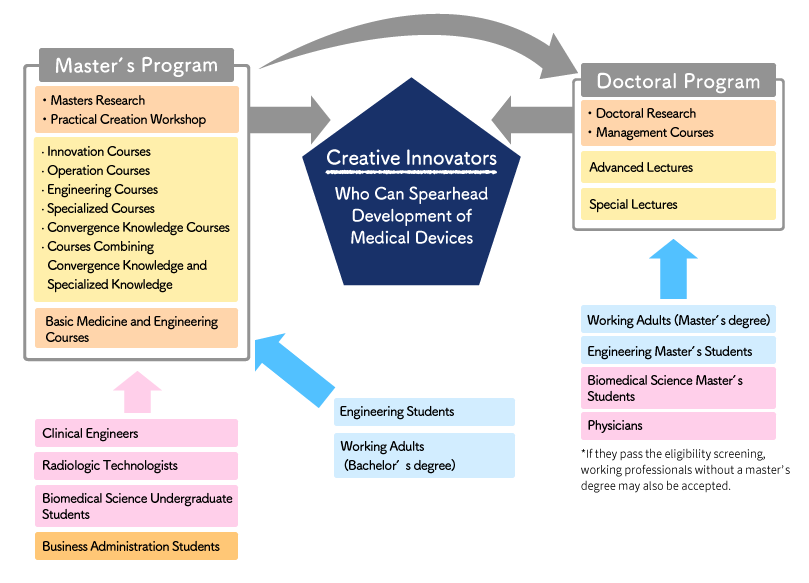
Educational Programs
Master’s Program
*Courses highlighted in yellow are required courses. Those highlighted in purple are elective courses.
- Convergence Knowledge Courses
-
Students will take introductory courses covering the specialized knowledge of the 4 areas comprising the Department of Frontier Life Science and Medicine program (Life and Medical Sciences, Medical Device Engineering, Future Social Medicine, and Health Sciences) as well as the theories and frameworks of Convergence Knowledge, which integrates knowledge and perspectives from different disciplines.
- Introduction to Frontier Life Science and Medicine
- Introduction to Convergence Knowledge
- Exercises in Designing Learning Plans
- Innovation Courses
-
From a manufacturing perspective, students will learn about problem-solving approaches based on design thinking and creation of medical device concepts that address user needs
- Advanced Lecture on Concept Creation in Medical Device Development
- Exercise in Concept Creation in Medical Device Development
- Advanced Lecture on Social Implementation of Medical Devices
- Operation Courses
-
Students will learn about regulatory science (essential for development of medical devices with a view to commercialization) and gain knowledge related to various business strategies and quality management from the perspective of legal and regulatory requirements when implementing concepts in society.
- Advanced Lecture on Regulatory Science in Medical Device Development
- Advanced Lecture on Business in Medical Device Development
- Advanced Lecture on Quality Management of Medical Devices
- Practical Creativity Workshops
-
Through group work exercises, students will learn how to identify needs based on field observations and communication with healthcare professionals, as well as how to develop concepts based on those needs.
- Practice of Needs Exploration through Clinical Site Observation
- Practice of Concept Creation in Medical Device Development
- Engineering Courses
-
Students will learn about specific examples of cutting-edge medical device and system design development through lectures in an omnibus format, and gain hands-on experience through practical exercises using state-of-the-art equipment in the “Medical Device Workshop”.
- Introduction to Medical Device and Systems Design
- Medical Device and Systems Design Exercises
- Specialized Courses
-
Students will take elective courses covering a variety of topics in the engineering and biomedical fields, such as medical materials engineering and pathophysiological metabolism.
- 【Medical Courses】
- Advanced Topics in Life Sciences
- Advanced Topics in Disease Sciences
- Social Medicine, Biomedical Ethics and Safety
…and more
- 【Engineering Courses】
- Medical Engineering Materials
- Medical Organic and Polymeric Chemistry
- Medical Sensing
- Introduction to Measurement Technology
- AI/Deep Learning
- Data Science Exercises
- Programming Exercises
- Internship
…and more
- 【Medical Courses】
- Courses Combining Convergence Knowledge and Specialist Knowledge
-
Students will plan and conduct research on medical device development, covering everything from ethical review and data analysis to writing research papers. They will also develop presentation skills through the use of logical and easy-to-understand presentation structures as well as question-and-answer sessions.
- Frontier Life Science and Medicine Project Research
- Presentation Skills Workshop
- Bridging Courses
-
In addition to the courses listed above, we offer bridging Courses for engineering and biomedical science students to help them acquire foundational knowledge in fields they have not previously studied.
Doctoral Program
- Management Courses
-
Students will study medical device development project management, leadership, entrepreneurship, and other related topics in depth, from a business management perspective.
- Advanced Lectures on Medical Research
-
Based on the latest medical device-related topics and academic knowledge, we will discuss future challenges and the potential for developing novel devices.
- Graduate School Special Lectures
-
Students will develop oral and visual presentation skills in a second language.
- Cooperative Education through Research Internships
-
By taking part in job-oriented research internships, students will acquire practical skills backed by research capabilities that will make them internationally competitive.
- Specific Research for Doctor
-
Within a specific research program conducted over 3 years, students will select a research topic related to medical devices or medical device development; design, plan and conduct a research project, and write a doctoral dissertation based on the results obtained.
Curriculum
Main Curriculum (Master’s program)
* Courses highlighted in yellow are required courses. Those highlighted in purple are elective courses.
| Courses | M1 | M2 |
|---|---|---|
| Convergence Knowledge Courses Required: 4 credits |
|
|
| Innovation Courses Required: 3 credits |
|
|
| Operation Courses Required: 3 credits |
|
|
| Practical Creativity Workshops Required: 4 credits |
|
|
| Engineering courses Required: 2 credits |
|
|
| Specialized Courses Elective: Minimum 6 credits |
|
|
| Courses Combining Convergence Knowledge and Specialist Knowledge Required: 8 credits |
|
|
| Bridging Courses |
In addition to the courses listed above, we offer bridging Courses for engineering and biomedical science students to help them acquire foundational knowledge in fields they have not previously studied. |
Total: Minimum 30 credits