KU-UW Alliance Project ― International Joint Symposioum Abstract
(Talk 1) 9:45Robert BalderasBecton, Dickinson and Company Defining Deep Biology with High Dimensional Platform Technologies. "Spatial protein localization and detection at the single cell level"Flow cytometry has long been a cornerstone technology in cell biology, allowing for the quantitative analysis of cell populations based on specific biological markers. In addition, flow cytometry also provides robust data regarding cell size, granularity, and fluorescence intensity with high throughput. However, it often lacks the spatial context of cellular morphology and complex structural features. Recent advancements in 2-dimensional electronic imaging technology have enabled the integration of imaging capabilities with traditional flow cytometry, creating a powerful hybrid approach. This new technology platform allows for the simultaneous acquisition of quantitative and qualitative data, enhancing the interpretation of cellular characteristics based on a series of imaging-based parameters. Thus, we can now visualize individual cells in a flow system, capturing detailed morphologic information alongside traditional readouts. Imaging flow cytometry also facilitates the study of cellular interactions, subcellular localization of proteins, detection of cell morphology and alterations in cellular architecture in response to various stimuli. This presentation will demonstrate the use of a series of defined imaging parameters in a variety of primary and cell line model systems. |
(Talk 2) 10:35Masanori MiyanishiKobe University Graduate School of Medicine Toward Visualizing the Cellular Heterogeneity of Bone MarrowThe hematopoietic system comprises the largest cellular population in the human body, with bone marrow as the primary site of lifelong blood-cell production. Unlike solid organs with defined architecture, bone marrow lacks an organized scaffold, making its cellular organization difficult to interpret through classical histology. This structural fluidity has required distinct analytical strategies. Flow cytometry has therefore been central, as its population-level resolution suits the dynamic and heterogeneous nature of hematopoiesis. However, the limited parameter capacity of conventional multicolor cytometers has hindered comprehensive characterization of the hematopoietic hierarchy, particularly the rare, undifferentiated hematopoietic stem cell (HSC) compartment. Long-term HSCs (LT-HSCs) reside at the top of this hierarchy, generating all mature blood lineages. Although panoramic single-cell technologies have broadened our understanding, high-resolution visualization of rare undifferentiated human populations remains difficult. Mouse systems have enabled functional dissection of HSC heterogeneity, but equivalent progress in humans has been limited. Here, we introduce an optimized analytical approach that enables high-resolution visualization of previously inaccessible undifferentiated regions within human hematopoiesis. By integrating multiple data modalities, this strategy also opens the door to in silico identification of molecular features that may define human LT-HSCs. In the presentation, I will share how this framework reveals aspects of the hematopoietic system—long hidden due to its structural invisibility—in a way that provides new conceptual and experimental possibilities. |
(Talk 3) 10:50Claudia MorenoUniversity of Washington Heart rate adaptability: from ion channels to heart dysfunctionMy research centers on the cardiac pacemaker, a specialized tissue near the right atrium responsible for generating the rhythmic electrical signals that initiate each heartbeat. Despite its discovery over a century ago, major gaps remain in our understanding of how this oscillator functions, adapts across species, and becomes dysregulated with age. My team uses an integrative approach to investigate pacemaker function from the ion channels that generate the electrical activity all the way to in-vivo physiology. We explore pacemaker adaptability across distinct timescales: from short-term adjustments that occur within seconds—such as the rapid rise in heart rate during stress—to long-term evolutionary adaptations observed in species with extreme heart rates. |
(Talk 4) 11:10Yasemin SancakUniversity of Washington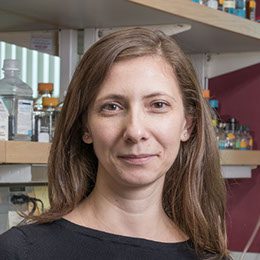 Novel Biochemical Methods to Investigate Mitochondria, Metabolism and SignalingMitochondria are multi-functional organelles that regulate many aspects of metabolism, immunity, calcium homeostasis. The overarching goal of my lab is to understand the mechanisms of mitochondrial signaling which ensures coordination of mitochondrial functions with cellular and organismal needs. Our lab uses cutting edge proteomics and cell biology techniques towards this goal. Two major areas of interest are mitochondrial calcium signaling, and mitochondria-organelle contacts, both of which have important functions in regulation of mitochondria, but are mechanistically poorly understood. To better understand calcium regulation of mitochondria, we used proteome integral solubility assay (PISA) in the presence of calcium ions. This effort nominated fatty acid oxidation and branched chain amino acid degradation pathways as a novel calcium-responsive metabolic pathways. We also developed a new method that we called ORCA for analysis of mitochondria from organelle contact sites, and found that Golgi-associated mitochondria have more active mitochondrial translation. Both PISA and ORCA are powerful and versatile biochemical methods that can be adopted to other systems to investigate various aspects of organelle biology. |
(Talk 5) 13:00Yasuhiko SatoCarl Zeiss AG Introducing light-field 4D microscopy technology that realizes one volume per one snapZEISS has introduced the LSM 910 and LSM 990 confocal microscopes, integrating refined spectral multiplexing technology with Airyscan-based super-resolution imaging. The newly implemented Lightfield 4D technology enables single-snap volumetric acquisition by reconstructing three-dimensional images from spatial fluorescence signal distributions. This innovation addresses a major limitation of conventional confocal microscopy by allowing truly simultaneous volumetric imaging. In this presentation, we introduce the principles and performance of Lightfield 4D technology and discuss its potential to advance high-speed, high-resolution three-dimensional imaging in life science research. |
(Talk 6) 13:20Junichi KikutaKobe University Graduate School of Medicine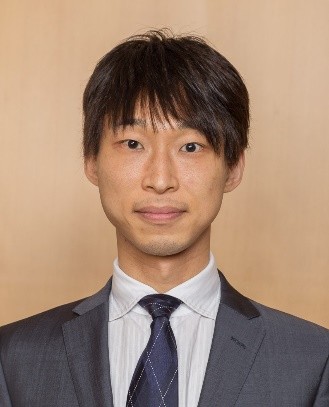 Dissecting inflammatory dynamics and their regulation through intravital imagingInflammation is a fundamental biological response essential for host defense against pathogens and the facilitation of tissue repair. However, dysregulated inflammatory responses underlie the pathogenesis of a wide range of diseases, including autoimmune disorders, chronic inflammatory conditions, and malignancies. Recent advances in immunology have led to the development of therapeutic strategies that modulate immune function, such as immune checkpoint inhibitors and molecularly targeted agents. Nevertheless, many inflammatory diseases still lack curative treatments, and their underlying mechanisms remain incompletely understood. To address these challenges, we have established intravital imaging techniques that enable the high-resolution, spatiotemporal visualization of immune cell dynamics in living animals. Through this approach, we have identified previously unrecognized regulatory mechanisms of immune responses, including the role of sympathetic nerve fibers innervating the bone marrow in orchestrating immune cell mobilization during inflammation. Furthermore, we have demonstrated that receptor activator of nuclear factor κB ligand (RANKL), a key osteoclastogenic factor, regulates vascular permeability within the bone marrow microenvironment. More recently, we have extended our imaging systems to multiple organs and developed in vivo models of fibrotic diseases, such as pulmonary fibrosis and systemic sclerosis, thereby enabling the real-time tracking of pathogenic macrophage subsets involved in tissue fibrosis. In this symposium, I will highlight the utility of intravital imaging in advancing our understanding of inflammatory processes and discuss its promise in elucidating disease mechanisms and guiding the development of innovative therapeutic strategies. |
(Talk 7) 13:35Smita YadavUniversity of Washington Unraveling Mechanisms Underlying Neurodevelopmental Disorders using Cortical OrganoidsNeurodevelopmental disorders currently affect more than 4% of children worldwide. Genetic studies of brain developmental disorders have brought to light important candidates including protein kinases that remain largely understudied despite being highly druggable therapeutic targets. To illuminate how the human kinome contributes to brain development and neurological disorders, the Yadav laboratory integrates a wide variety of techniques in molecular neurobiology, stem cell technology, chemical-genetics, proteomics, and microscopy. Our recent work has defined the function of one such protein kinase, TAOK1, mutations in which cause neurodevelopmental delay, autism, speech deficits, and macrocephaly. I will present our findings that established the function of TAOK1 as a membrane remodeling kinase, and our ongoing work towards understanding its role in brain disorders using proteomic and scRNA seq analyses of human cortical brain organoids that recapitulate the TAOK1 neuropathology. |
(Talk 8) 13:55Marta SodenUniversity of Washington Approaches for investigating neural circuits that govern motivated behaviorUnderstanding how neural circuits control specific behaviors necessitates a multi-layered approach, as we investigate how cell-type specific gene expression, neuronal excitability, anatomical connectivity and responsivity to stimuli intersect to drive circuit output. Recent advances in gene mutagenesis, transcriptomic, and in vivo imaging technologies have enabled the dissection of neural circuits with unprecedented precision, allowing us to isolate the effects of co-released neuropeptides and neurotransmitters and identify specific postsynaptic target neurons. We recently identified a novel peptidergic neural circuit from the periaqueductal gray to the ventral tegmental area that simultaneously evokes threat-response and reward-related behaviors in mice. Using this example, I will discuss how we have developed and implemented an approach to investigating neural circuits that incorporates CRISPR mutagenesis, activity-dependent transcriptomics, optogenetics, whole-cell patch clamp, and in vivo sensors in order to uncover circuit structure and function. I will highlight the advantages of this multifaceted approach, discuss current challenges, and outline technologies in development that will further advance our ability to understand specific circuit control of behavior. |
(Talk 9) 15:05Yuji Sato10x Genomics Japan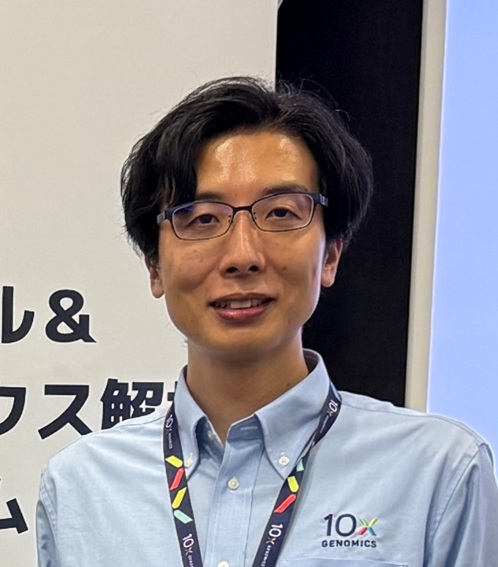 Unparalleled single cell spatial discoveryPowering innovation in labs around the world, the Xenium platform is a complete solution that combines ultimate versatility with easy, streamlined workflows. We invite you to see for yourself at the symposium, where you can explore how the Xenium platform gives you:
Join us to learn how our technologies can help you sharpen your research with single cell multiomics, explore tissue and tumor architecture with spatial profiling and see further than ever before with high-throughput in situ transcriptomics at subcellular resolution. With this comprehensive toolkit, you can combine these multidimensional analyses into a more holistic approach to developing better therapeutics and predicting patient outcomes. |
(Talk 10) 15:25Masafumi HorieKobe University Graduate School of Medicine Spatial Mapping of Small Cell Lung Carcinoma: Intratumoral Diversity and Discovery of a New Macrophage SubsetSmall cell lung cancer (SCLC) is a highly aggressive neuroendocrine carcinoma with a poor prognosis and limited treatment options. Recent advances in molecular profiling have revealed inter-tumoral heterogeneity within SCLC, leading to a refined classification based on key transcriptional regulators such as ASCL1, NEUROD1, POU2F3, and YAP1. Although this framework has opened new avenues for targeted therapy and biomarker development, the extent of intratumoral heterogeneity—as well as the contribution of the tumor immune microenvironment, particularly tumor-associated macrophages (TAMs)—remains incompletely understood. The emergence of novel technologies, including single-cell RNA sequencing and spatial transcriptomics now enables deeper interrogation of tumor biology, lineage plasticity, and the tumor microenvironment. Here, we performed spatial multi-omics profiling of 18 surgically resected lung cancer samples, including 16 SCLC cases. Transcriptomic subtyping revealed marked heterogeneity, with multiple coexisting cellular states present within individual tumors. Integration of trajectory analysis and copy-number estimation highlighted potential developmental pathways underlying this diversity and identified candidate regulatory mechanisms governing cellular plasticity. We further identified a previously unrecognized MMP12-positive TAM population enriched at the tumor interface and spatially associated with necrotic and hypoxic regions. In vitro direct co-culture under hypoxic conditions confirmed that MMP12 induction in TAMs is both hypoxia-dependent and contact-dependent. Together, these findings delineate the complex spatial architecture of SCLC, uncover extensive intratumoral heterogeneity, and reveal a novel TAM subset that may contribute to treatment resistance and represent a potential therapeutic target. |
(Talk 11) 15:40Nobuhiko HamazakiUniversity of Washington Reconstruction of human post-gastrulation development in vitroUnderstanding the mechanistic underpinnings of human post-gastrulation development is crucial, as disruptions during this period often result in severe developmental diseases such as neural tube defects, anencephaly, and cardiac malformations. Despite its importance, research into this stage is significantly restricted due to ethical and technical barriers associated with accessing and studying human in vivo embryos. Consequently, researchers have sought alternative approaches, with human pluripotent stem cell (hPSC)-derived embryo models emerging as a promising solution. As part of this effort, we have established two distinct in vitro models, the RA-gastruloid and the AP-gastruloid, which successfully recapitulate broad aspects of human embryogenesis. This presentation will highlight recent progress using these models to elucidate the complex regulatory mechanisms governing early human development and discuss the potential of these systems to provide foundational insights into the etiology of developmental disorders. |
(Talk 12) 16:00David ShechnerUniversity of Washington Plug-and-play proximity ‘omics tools for probing RNA spatial biology at subcellular resolutionMammalian nuclei are partitioned into thousands of biochemically distinct microcompartments that collectively control nearly all genomic functions. However, understanding how this architecture shapes gene expression at the local scale has been hindered by a lack of robust tools for elucidating the molecular interactions at individual genomic loci. o address this challenge, we adapted O-MAP—a universal, RNA-targeted in situ proximity-biotinylation tool—into a flexible platform for biochemically dissecting discrete subnuclear neighborhoods. By targeting nascent pre-mRNAs or chromatin-regulatory noncoding RNAs, O-MAP systematically reveals the proteins, RNAs, and chromatin interactions that uniquely define each transcript's local microenvironment. In proof-of-principle studies, we applied this approach to three model compartments: (1) a cardiac-specific "Splicing Factory" assembled on nascent Titin pre-mRNAs; (2) the X-Chromosome inactivation center; and (3) neurotoxic RNA foci nucleated by the (CAG)-repeat-expanded Huntingtin mRNA. These analyses uncovered scores of unanticipated, RNA-scaffolded compartmental interactions, including hubs of trans-chromosomal contacts and post-transcriptional RNA clustering that are opaque to conventional tools. They furthermore identified key RNA- and chromatin-regulatory proteins that are essential to each compartment's organization, and which are dysregulated in models of cardiac disease and neurodegenerative disorders. Together, this work establishes a powerful, yet accessible toolkit for probing new facets of mesoscale genome organization, with broad implications for cell biology and disease etiology. |
(Talk 13) 16:50Norio ChiharaKobe University Graduate School of Medicine Engineering Immune Cells for Neuroprotection: Lessons from Multiple Sclerosis and Neuromyelitis OpticaIn line with the session theme “Designing the Future: Innovations in Cell Engineering,” this presentation will examine how rethinking immune cell function inside the central nervous system (CNS) can guide next-generation therapies for neuroinflammatory disease. Treatments for multiple sclerosis (MS) and neuromyelitis optica spectrum disorder (NMOSD) have largely targeted peripheral lymphoid tissues, using B-cell–directed, anti-cytokine, and complement-inhibiting agents. These approaches have reduced relapse rates but only partially address progression and neurodegeneration. On the other hand, the roles of microglia, border-associated macrophages, and infiltrating lymphocytes within the brain and spinal cord remain less well defined. Emerging single-cell and spatial technologies, together with advanced imaging, are now revealing immune cell states and circuits that shape synapses, myelin repair, and neuronal survival in the CNS milieu. We will discuss how mapping and functionally testing these CNS-resident and infiltrating immune populations inform new strategies for cell engineering and cell-targeted intervention. Examples include approaches to reprogram microglia toward protective phenotypes, to tune myeloid and lymphoid trafficking across CNS barriers, and to design immune cells that act as local sensors and effectors of neuroinflammation. By connecting clinical experience in MS and NMOSD with a deeper understanding of CNS immune ecology, this talk will outline how targeting the right cell in the right compartment may yield more effective and safer treatments—not only for classical neuroimmune diseases but also for a broader range of neurological disorders, including neurodegenerative and psychiatric disorders. |
(Talk 14) 17:05Sam A. GoldenUniversity of Washington Preclinical tools for bridging brain, body, and behaviorUnderstanding how neural circuits give rise to behavior requires tools that can quantitatively link brain activity, physiological state, and naturalistic behavior. This talk highlights a suite of preclinical, open-source technologies designed to bridge these domains across scales, from single cells to whole animals, while prioritizing accessibility and interpretability. First, I will describe advances in automated behavioral analysis using supervised machine learning, focusing on the Simple Behavioral Analysis (SimBA) platform. By integrating explainable AI approaches such as SHAP values, SimBA enables transparent, quantifiable definitions of complex behaviors, transforming behavior from a subjective observation into a sharable, comparable experimental reagent across laboratories and species. Second, I will present wireless, battery-free implantable devices for continuous multiparametric monitoring in freely behaving animals. These bio-mechano-acoustic systems provide simultaneous measures of heart rate, respiration, temperature, activity, and behavioral state in individual animals and social groups, enabling real-time integration of physiological and behavioral dynamics during pharmacological, stress, and circuit-manipulation experiments. Finally, I will discuss advances in whole-brain cellular mapping using ArgiNLS, a nondeleterious nuclear localization strategy that improves fluorescent signal-to-noise and machine-learning–based segmentation of single cells in large-scale volumetric imaging datasets. This approach facilitates robust alignment of brain-wide cellular activity patterns with precisely quantified behaviors. Together, these tools illustrate a convergent framework for preclinical neuroscience that unifies brain, body, and behavior, enabling scalable, interpretable, and mechanistic insights into complex biological states relevant to health and disease. |
(Talk 15) 17:25Andre BerndtUniversity of Washington Accelerating Fluorescent Sensor Engineering for Neuroscience with Machine Learning and High-Throughput PlatformsGenetically encoded fluorescent sensors have become indispensable tools for visualizing neural activity and biochemical signaling in living systems. My laboratory integrates machine learning, structure-guided design, and high-throughput screening to develop next-generation fluorescent sensors optimized for in vivo imaging. Using these combined strategies, we engineer and refine sensors to achieve improved brightness, kinetics, and spectral properties, which are suitable for multiplexed recording. Our work spans multiple molecular targets and modalities, including calcium, reactive oxygen species (ROS), steroid hormones, and endogenous opioids. In addition, we are developing sensors with fluorescence lifetime readouts, which provide quantitative measurements that are less sensitive to artifacts such as expression level or motion. The integration of machine learning models with experimental screening enables rapid identification of functional variants from large mutational libraries, thereby accelerating sensor design and improving sensor performance. The combination of predictive computational models and automated screening platforms provides a scalable framework for engineering sensors that can visualize complex signaling processes across the brain and body. |