Special Lectures in “Wakate Dojo” ― FY2025

(Special Lecture 1) Thursday, January 29, 17:20 ― 18:20Dr. Noboru MizushimaProfessor, Department of Molecular Biology, Graduate School of Medicine, The University of Tokyo Intracellular degradation by autophagy and its related pathwaysAutophagy is an intracellular degradation system conserved in many eukaryotes. In the process of autophagy, a portion of the cytoplasm is surrounded by autophagosomes and then delivered to lysosomes for degradation. Studies on the molecular mechanism and physiological function of autophagy have made remarkable progress over the past 30 years since the landmark genetic studies in yeast by Dr. Yoshinori Ohsumi and other groups. In this lecture, I will discuss some recent topics on autophagosome-lysosome fusion and the reversibility of neuronal dysfunction caused by autophagy defects. In addition to these autophagy-dependent pathways, I will show a new organelle degradation system in the lens, which is mediated by the cytosolic lipase PLAAT (phospholipase A and acyltransferase) family. |
(Special Lecture 2) Friday, January 30, 9:00~10:00Dr. John D. ScottEdwin G. Krebs–Hilma Speights Endowed Professor, Department of Pharmacology, Univeristy of Washington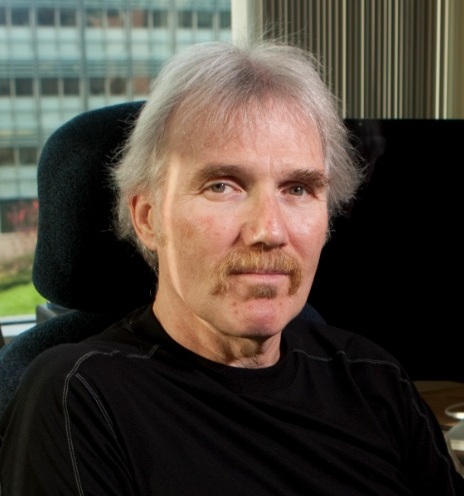 John D. Scott is the Edwin G. Krebs–Hilma Speights Professor and Chair of the Department of Pharmacology at the University of Washington School of Medicine. He received his B.Sc. (Hons) degree in biochemistry from Herriot-Watt University, Edinburgh, and his Ph.D. from the University of Aberdeen. He did his postdoctoral research on protein kinase inhibitors under the guidance of Nobel Laurites Edwin Krebs and Edmund Fischer at the University of Washington. Scott is recognized for the discovery of AKAPs (A-kinase anchoring proteins), a large family of scaffold proteins that target signaling enzymes to specific cellular compartments. His work has markedly altered how we think about intracellular signaling. Whereas the enzymes that mediate intracellular signaling were previously thought to be soluble entities that diffuse freely throughout cells, we now know that they exist as components of large protein complexes that coordinate signaling events at defined cellular locations. Using genetic, structural, electrophysiological, and super-resolution imaging techniques, researchers have demonstrated that A-kinase anchoring proteins (AKAPs) enhance the precision of cellular signaling. This body of work has led to the proposal that AKAPs restrict the action of protein kinase A to a radius of 200-400 angstroms around subcellular organelles. In 2016, Dr. Scott was appointed Chair of the Department of Pharmacology at the University of Washington. These local responsibilities complement his broader service as a member of scientific advisory boards for research institutes and academic basic science departments in medical schools across the US, Australia, Asia, and Europe. Dr. Scott has received numerous accolades, including the Able and Axelrod awards from the American Society of Pharmacology and Therapeutics, the Rose Award from the American Society of Biochemistry and Molecular Biology, and the Ariens Award from the Dutch Pharmacology Society. He is a fellow of the Royal Society, London, the Royal Society of Edinburgh, and a member of the Norwegian Academy of Science and Letters. |