KU-UW Alliance Project
September 18 - September 20, 2024 at University of Washington, Seattle, USA
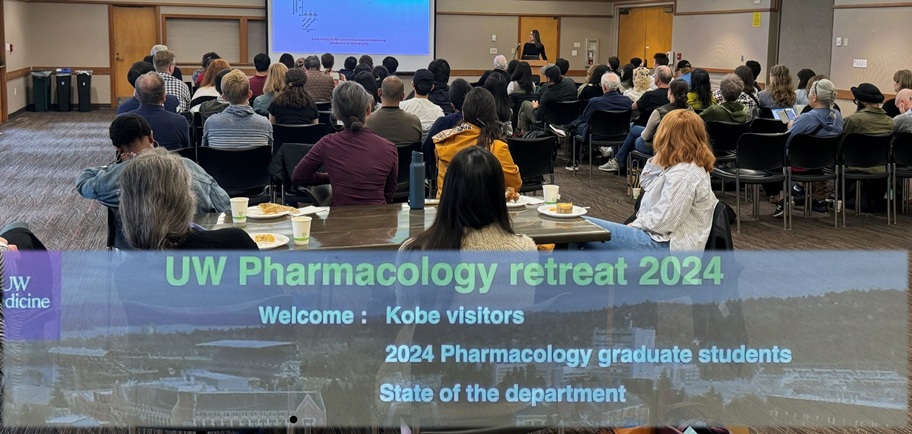
In Septemver 2024, CMX menbers participated in the annual retreat hosted by the Department of Phamacology at the University of Washington, USA, upon the invitation of Professor John D. Scott.
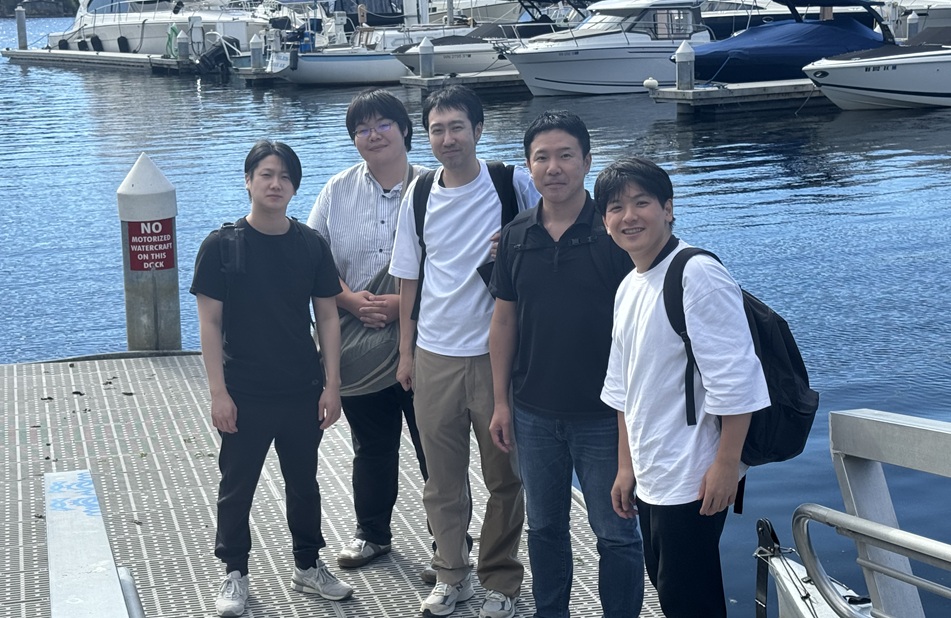
Representing the center, Director Takumi delivered a lecture titled “Towards an understanding of the pathophysiology of autism,” while five members, including graduate students, presented posters. Additionally, prior to the retreat, arrangements were made to visit four research labs for valuable information gathering.
Nobuhiro Nakai, Project Assosiate Professor in Physiology
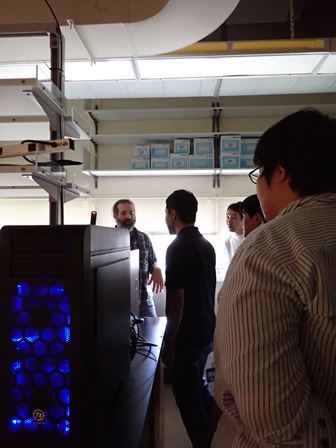
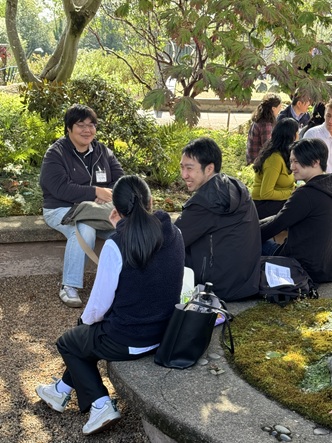
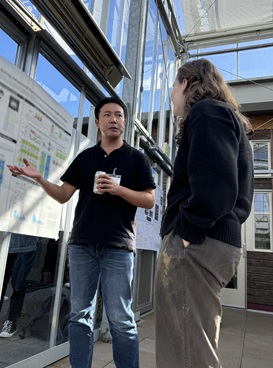
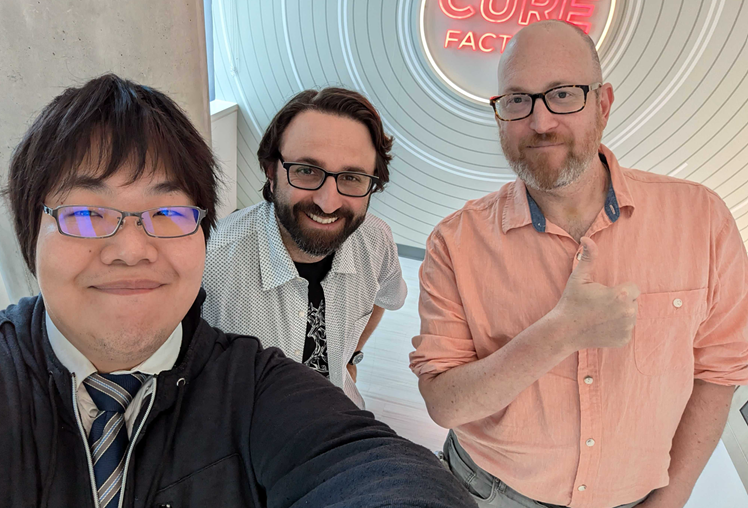
As part of the KU-UW Alliance Project, my colleagues and I visited both the Golden and Stuber labs at the University of Washington. At the Golden Lab, we were guided by Dr. Sam Golden himself, who introduced research involving implantable vital sensors and light-sheet microscopy, and explained tools like SimBA, a leading platform for automated analysis of mouse behavior. At the Stuber Lab, Dr. Kentaro Ishii kindly guided us through the lab, and we were introduced to research using two-photon calcium imaging as well as a custom-built behavioral setup designed to study mouse taste responses. Both labs were conducting cutting-edge research, and I was impressed by the high quality of their work and the active engagement of students and staff. I also had a productive discussion with Dr. Ishii about our ongoing collaborative project, particularly focusing on strategies for whole-brain imaging in autism model mice.
During our stay, we also participated in the Department of Pharmacology retreat, where I presented a poster and engaged in lively discussions with researchers. I was especially struck by how actively students asked questions and initiated discussions, something not often seen at conferences in Japan. I also had the opportunity to join a lunch conversation among several PIs at UW, where speaking with Dr. Michael Bruchas was especially insightful. He shared valuable experiences about running a lab in the U.S. and mentoring students. This visit deepened our connection with UW and provided valuable insights that will benefit our future research. I sincerely hope the collaboration between our institutions continues to grow and foster mutual development.
Yusuke Shintani, Project Assistant Professor in Physiology
From September 18 to 22, 2024, I participated in the KU-UW Alliance Project, a researcher exchange program between Kobe University and the University of Washington. During my visit, I had the opportunity to explore the research conducted in laboratories within the Department of Pharmacology at the University of Washington, including the Stuber Lab, Golden Lab, and Bruchas Lab. Specifically, I observed cutting-edge neuroscience experiments, such as single-cell live imaging using two-photon microscopy and automated behavioral analysis systems utilizing deep learning. This visit provided valuable insights into the practical implementation of these techniques. Additionally, I had a dinner meeting with Professor Scott, Professor Land, and Assistant Professor Soden, where we exchanged opinions on education and laboratory management at the University of Washington. In particular, I got valuable insights into research funding strategies and the decision-making process for student research projects.
Furthermore, I presented a poster at the symposium organized by the Department of Pharmacology. The presentation led to active discussions based on specific experimental data, allowing me to receive valuable feedback. The KU-UW Alliance Project was an great opportunity for deepening my understanding of research methodologies and technologies. In addition, through this project, I managed to strengthen my network with international researchers. I intend to apply the knowledge and experience gained from this project to my future research, leading to further advancements in my work.
Akihiro Nishimura, Docrtal Student in Pediatrics
By participating in the KU-UW Alliance Project, I was able to gain valuable insights not only into the advanced research and facilities at the University of Washington, but also into the latest treatments for brain tumors at Seattle Children’s Hospital. In particular, the visit to Dr. Vitanza’s lab—renowned for its groundbreaking publications on CAR-T therapy for brain tumors—was especially meaningful. I had the rare opportunity to receive a direct explanation from Dr. Vitanza about the lab’s research overview. Moreover, I was able to learn about the most up-to-date treatment approaches that have yet to be published, as well as the potential downsides of CAR-T therapy. This kind of knowledge and experience could only be gained by physically visiting the research site—not through academic conferences, emails, or online meetings.
I also had the opportunity to briefly introduce the research we are currently working on, and was even able to secure a positive response regarding the possibility of future collaboration. If such a joint project were to materialize, it would not only benefit Kobe University but could also bring significant advantages to all pediatric brain tumor patients across Japan. This was undoubtedly the most valuable outcome of the visit. While the development of the internet has certainly brought the world closer, this experience reaffirmed the importance of face-to-face interactions, as demonstrated by the KU-UW Alliance Project. In closing, I would like to express my heartfelt gratitude to everyone who made this project possible.
Hiroto Kuno, Docrtal Student in Physiology
I had an opportunity to participate in the KU-UW Alliance Project exchange program held at the University of Washington in Seattle from September 18 to 22, 2024. On September 18 and 19, I visited the Golden Lab, Stuber Lab, and Bruchas Lab, and all of these labs are at the forefront of the neuroscience research field. It was very educational for me to observe their advanced equipments and tools. On September 20, I participated in the UW Pharmacology Retreat. After attending symposium talks by various labs in UW Pharmacology, I gave a poster presentation on my research. I am studying the pathophysiology of tic disorders using the model mice. While there were not researchers working on similar topics, the students and faculties of UW were very interested in my presentation, and actively asked questions about my research. It helped me clarify the issues and points for improvement in my research.
I think opportunities directly visit overseas laboratories, observe their facilities, and interact with their members are rare but deeply enriching experiences.
Mao Suzuki, Docrtal Student in Physiology
As part of this program, we visited the University of Washington. During the visit, we participated in lab tours, a symposium, and a poster session. One of the most valuable experiences was visiting the Sam Golden Lab and the Garret Stuber Lab. We were given an overview of their research facilities and experimental techniques, with a particular focus on light sheet imaging using SmartSPIM. We observed the actual equipment in use while receiving a detailed explanation of the measurement techniques, as well as data management and statistical analysis. Additionally, We were introduced to two-photon imaging and custom-built experimental devices, gaining insight into their characteristics and practical applications.
This experience not only deepened my technical understanding but also provided practical knowledge on research methodologies and data handling. In particular, discussions on appropriate resolution settings for data analysis and the application of efficient statistical methods were highly relevant and directly applicable to my future research. Another significant aspect of the visit was the opportunity to interact with researchers and students at the University of Washington. These exchanges broadened my perspective on research and provided valuable insights for considering future international collaborations and study abroad opportunities.